

Your tables face spills, heat, drops and scratches every single day. Picking the right table tops can save you headaches and keep your restaurant looking sharp. From laminate table tops that stand up to heavy use, to wood options with classic appeal, and composite choices that blend durability with style, this guide breaks down what fits your needs best. Let’s match your dining table selection to your restaurant’s rhythm—not just your taste.
Your Tables Take More Abuse Than Anything Else in Your Restaurant
Think about it. Your restaurant furniture goes through a daily workout that would make a gym membership look easy. Hot plates land on surfaces without warning. Drinks spill. Silverware drops. Guests lean, push, and sometimes even stand on them. Your table tops are the unsung heroes of your dining room, and choosing the right ones can make the difference between constant repairs and years of reliable service.
The good news? You have options that fit every concept, budget, and aesthetic vision. Let’s break down the three main contenders in the commercial table tops arena.
Laminate Table Tops: The Workhorse of High-Volume Restaurants
Why Laminate Works for Busy Concepts
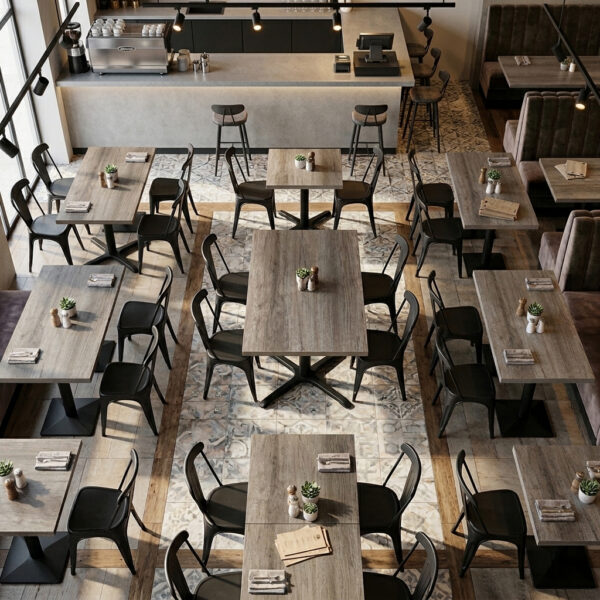 |
If you’re running a high-traffic diner, casual restaurant, or fast-casual spot, laminate table tops deserve your attention. These surfaces are built to handle the daily grind without complaining.
Laminate brings some serious advantages to your dining room:
-
Budget-friendly pricing that doesn’t sacrifice quality
-
Resistance to scratches that would damage other materials
-
Easy cleaning with standard commercial products
-
Wide variety of colors and patterns to match your design
-
Lightweight construction for easy table moves and cleaning
The Reality Check
Laminate table tops aren’t perfect for every situation. They can show wear at the edges over time, especially if your bussers are rough with trays. Heat resistance is good but not unlimited. A sizzling fajita plate left directly on the surface can leave marks.
For pizza joints, breakfast spots, and family restaurants where turnover is high and budgets are tight, laminate is often your best friend.
Wood Table Tops: Classic Appeal with Premium Presence
When Wood Makes Sense
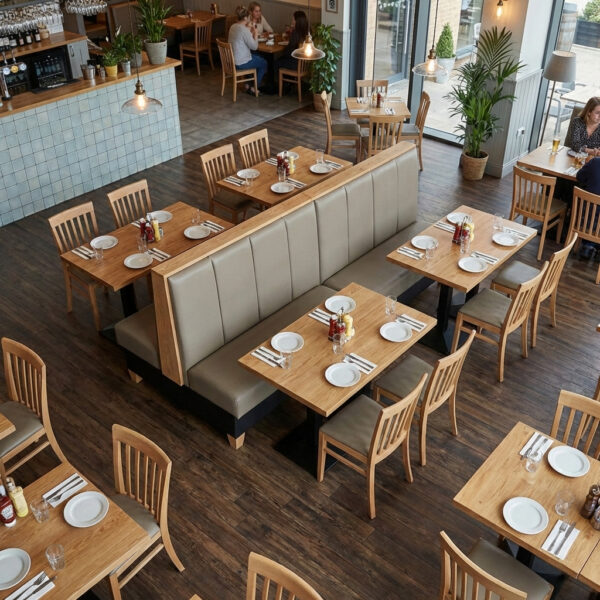 |
Wood veneer or solid wood table tops bring warmth and character that synthetic materials just can’t match. If you’re running an upscale steakhouse, farm-to-table bistro, or wine bar, wood creates the atmosphere guests expect.
The benefits are clear:
-
Natural beauty that ages gracefully
-
Can be refinished multiple times over the years
-
Substantial feel that communicates quality
-
Unique grain patterns make each table one of a kind
-
Works beautifully with both traditional and modern design
What You’re Signing Up For
Let’s be honest about maintenance. Wood table tops need more care than laminate. You’ll need to:
-
Use coasters and trivets to protect from heat and moisture
-
Clean up spills quickly to prevent staining
-
Refinish surfaces periodically to maintain appearance
-
Accept that some patina and character marks will develop
Wood veneer options give you the look of solid wood with better moisture resistance and more consistent pricing. This middle ground works well for many restaurant concepts.
Composite Table Tops: The Best of Both Worlds
Modern Materials for Modern Restaurants
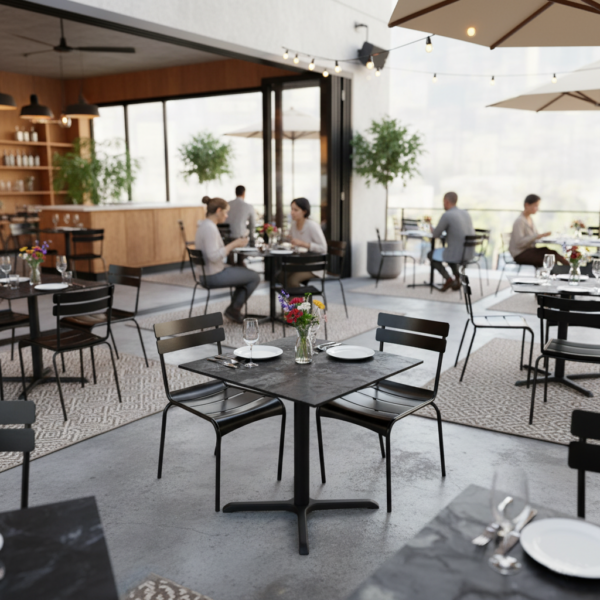 |
Composite table tops, like those made with COMPCOR technology, represent the sweet spot for many restaurant owners. These engineered surfaces combine durability with style in ways that make sense for contemporary concepts.
What makes composite worth considering:
-
Superior moisture resistance compared to solid wood
-
Better heat tolerance than standard laminate
-
Scratch resistance that holds up to daily service
-
Consistent quality across all pieces
-
Lower maintenance than natural wood
Matching Material to Concept
Your dining table selection should reflect how your restaurant actually operates, not just how you want it to look. Composite table tops shine in:
-
Casual dining restaurants with moderate to high volume
-
Outdoor dining areas that face weather exposure
-
Bars and breweries where spills are constant
-
Contemporary concepts that want a polished look without constant upkeep
Making Your Decision: Key Considerations
Cleaning Chemicals Matter
Different table tops react differently to cleaning products. Laminate handles most commercial cleaners without issue. Solid wood needs gentler, pH-neutral solutions. Composite typically falls in the middle. Check with your supplier about what cleaning products work best with your chosen material.
Heat Resistance Varies
If your menu includes sizzling plates, hot stone bowls, or cast iron skillets, heat resistance becomes critical. Solid wood needs protection. Quality laminate can handle moderate heat. Composite options often provide the best heat resistance.
Scratch Resistance Impacts Longevity
In a perfect world, servers would never drag trays across surfaces. In the real world, scratches happen. Laminate resists scratches well. Solid wood shows them but can be refinished. Composite strikes a balance between the two.
Oak Street: Your Partner in Restaurant Furniture
When you’re ready to outfit your dining room, working with a supplier who understands commercial table tops makes everything easier. Oak Street offers quick ship options when you need tables fast, plus custom table tops when your concept calls for something specific.
Whether you land on laminate for its practicality, solid wood for its character, or composite for its balance of features, you’ll find multiple material options designed for different restaurant concepts.
Match Your Tabletop to Your Concept, Not Your Preference
Here’s the truth: the table tops you love in your home might be completely wrong for your restaurant. Your personal taste matters, but your concept’s needs matter more.
High-volume breakfast spot? Laminate keeps you moving. Intimate wine bar? Solid wood creates the right mood. Contemporary gastropub? Composite delivers style with substance.
The right choice isn’t about what’s “best” in the abstract. It’s about what works best for your specific restaurant, your service style, your budget, and your long-term vision.
Ready to make your dining table selection? Start by being honest about your daily operations, then choose the material that supports your team and delights your guests, shift after shift, year after year.