

Fast Casual vs. Fine Dining Furniture: What Actually Matters for Each Concept
A chair that’s perfect for a fine dining room can slow down a fast casual concept’s throughput. A chair built for volume can make a white-tablecloth restaurant feel like a cafeteria. The two ends of the restaurant spectrum aren’t just decorated differently. Their furniture is solving for opposite goals.
Fast casual furniture has to support speed, durability and quick cleaning. Fine dining furniture has to support comfort, quiet and a sense of value. Knowing which goal you’re solving for should drive every purchasing decision, from the chair frame to the tabletop to how far apart you set the tables.
Fast Casual vs. Fine Dining Furniture at a Glance
| Factor | Fast Casual | Fine Dining |
|---|---|---|
| Typical table turn | 30–45 minutes | 90–120+ minutes |
| Dining area per seat | About 11–14 sq ft | About 18–20 sq ft |
| Seating | Metal frames, molded or wood seats, light padding | Fully upholstered with real cushioning and back support |
| Tabletops | Laminate or resin with sealed edges | Hardwood, stone or stone-look, often dressed with linens |
| Upholstery | Minimal; commercial vinyl where used | Premium vinyl, leather or fabric |
| Top priority | Durability and cleaning speed | Comfort and perceived value |
| Where to spend | Frames, welds, glides and edge banding | Seating comfort and matched finishes |
| Where to save | Decorative finishes | High-traffic bar or patio seating |
Fast Casual: Optimize for Turnover, Durability and Cleaning Speed
|
|
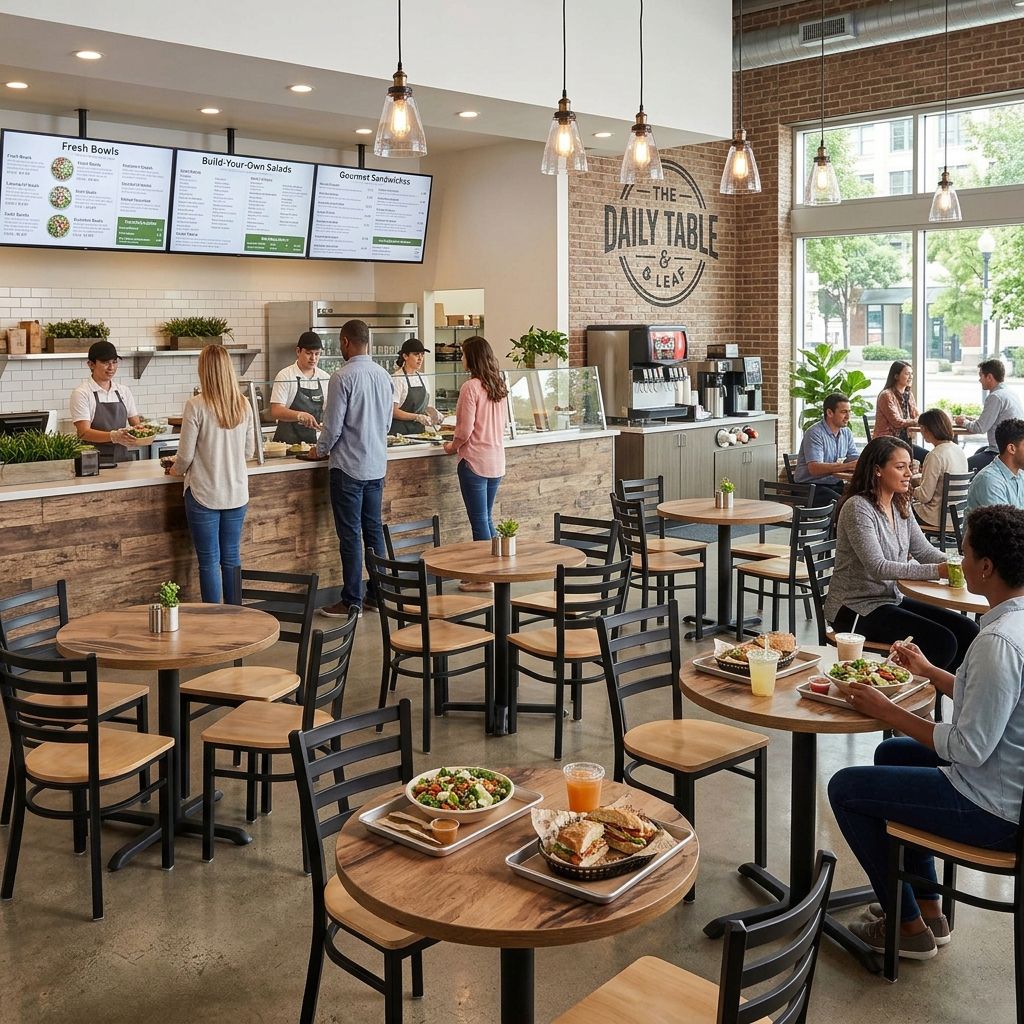
Fast casual concepts usually aim for table turns of 30–45 minutes, and the furniture should support that pace. Priorities:
- Seating comfortable enough for a 30-minute meal, but not for camping. Metal frames with molded, wood or lightly padded seats let guests eat comfortably without settling in for the afternoon.
- Tighter table spacing. Every square foot of dining room is revenue, so fast casual layouts often run about 11–14 sq ft per seat, compared with 18–20 for fine dining. Keep aisles clear for guests carrying trays and for staff bussing tables.
- Wipeable, chemical-resistant surfaces. Staff often have under a minute to clear and wipe a table between guests. Laminate or resin tops with sealed edges hold up to repeated sanitizer use.
- Stackable or lightweight chairs. They make it easy to rearrange seating for large groups, private events and nightly floor cleaning.
- Little or no upholstery. Fabric maintenance rarely pays off at fast casual prices and traffic levels. Where you do want padding, choose commercial-grade vinyl rated for heavy use (100,000+ double rubs is a common spec for high-traffic restaurants).
- Heavy-duty construction. Chairs here get dragged, tipped and stacked many times a day. Welded joints, reinforced leg braces and replaceable floor glides matter more than decorative finishes.
Fine Dining: Optimize for Comfort, Quiet and Perceived Value
|
|
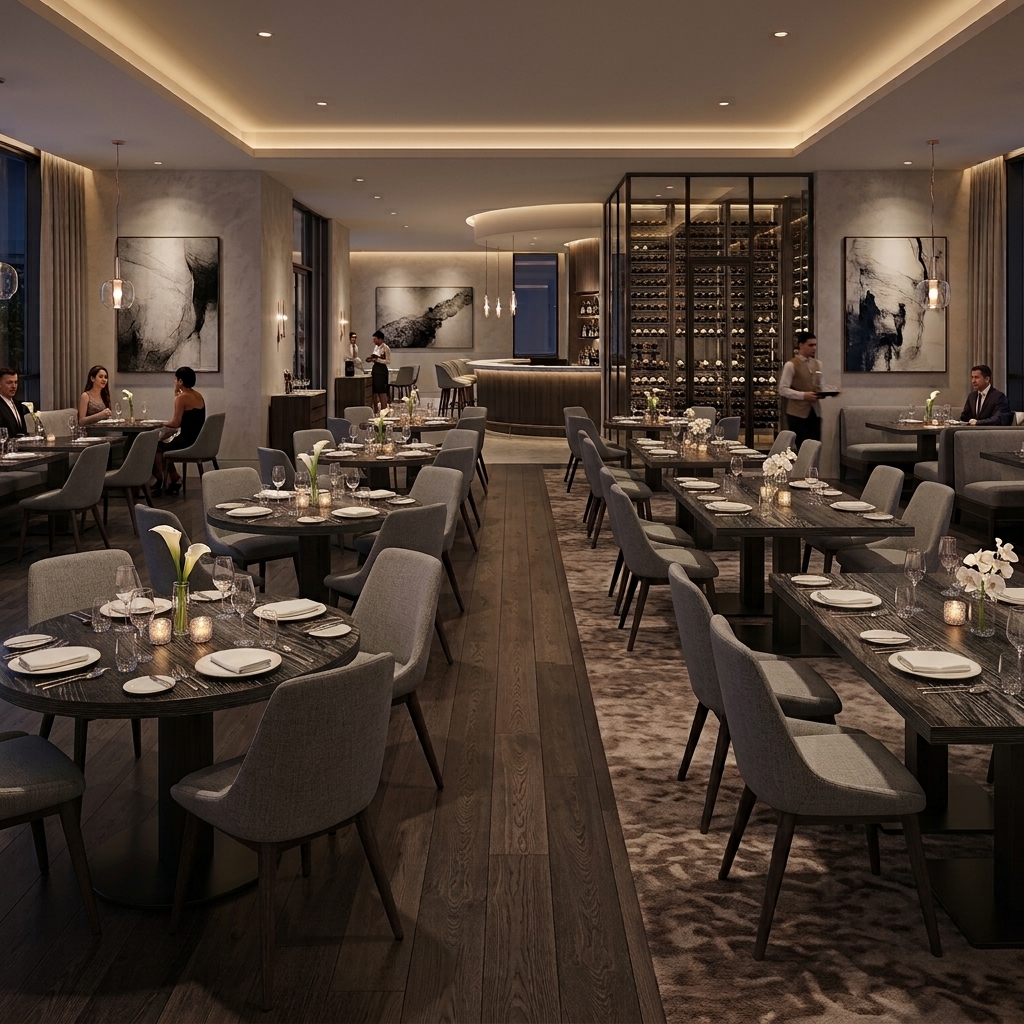
Fine dining runs on a different clock. Table turns of 90–120 minutes or longer are normal because the check average and the experience justify the slower pace. Priorities:
- Upholstered seating with real support. Guests sit for two hours or more, so cushioning, seat depth and lumbar support directly support the dwell time the business model depends on.
- Wider table spacing. About 18–20 sq ft per seat gives guests privacy and a sense of exclusivity. You give up seats per square foot, and that’s a deliberate tradeoff, not a mistake.
- Quality materials. Hardwood frames, stone or stone-look tops, and premium vinyl, leather or fabric signal your price point before the food arrives.
- Sound control. Soft materials absorb sound. Upholstered chairs, booths and banquettes quiet a room far more than hard surfaces, and felt or quality floor glides stop chair-scrape noise. Both support the calmer atmosphere fine dining guests expect.
- Matched finishes. Chairs, tables and booth seating should come from the same finish and fabric program. A small mismatch looks “budget” in a fine dining room in a way it doesn’t in a casual one.
Fast-Fine and Upscale Casual Concepts: Use a Sliding Scale
If your concept sits between the two (fast-fine, upscale casual or casual full service), treat this as a sliding scale rather than a choice between the two. Match each area of the room to its job:
- Spend on comfort and finish in areas that drive check average and longer stays, such as booths, banquettes and lounge seating.
- Spend on durability in areas with heavy traffic or exposure, such as bar stools, patios and counter seating near the entrance.
This approach lets one dining room deliver a premium feel where guests linger without paying premium replacement costs where they don’t.
The Cost Mistakes to Avoid
Most furniture budget problems come from buying for the wrong concept:
- Overspending on finishes in a fast casual room. A fast casual dining room can see three times the turnover of a fine dining room. Delicate finishes and fabric upholstery wear out fast there, so you end up paying premium prices on a budget replacement schedule.
- Underspending on comfort in a fine dining room. At fine dining prices, the chair is part of what the guest is paying for. An uncomfortable or cheap-looking seat undercuts a $150 check before the first course arrives.
In both cases, don’t cut corners on construction. Commercial-grade frames and joints cost more upfront but last years longer than residential or light-duty furniture in any restaurant setting.
Frequently Asked Questions
How much space per seat does a restaurant need?
A common rule of thumb is about 11–14 sq ft per seat for fast casual, 12–15 sq ft for casual full service and 18–20 sq ft for fine dining. These figures cover the dining area only, not the kitchen or restrooms. For more information, check out our Recommended Chair & Table Setup resource or our Table Capacity Calculator. Always confirm your layout against local fire and accessibility codes.
What is the most durable restaurant chair material?
Welded steel or aluminum frames are the most durable for high-traffic restaurants. Pair them with molded, laminate or commercial-vinyl seats. Commercial hardwood with reinforced joinery also holds up well and is often preferred in fine dining for its look.
What does “double rubs” mean for restaurant upholstery?
Double rubs measure abrasion resistance: how many back-and-forth rubs a fabric or vinyl survives in a lab test before it shows wear. Higher numbers mean longer life. High-traffic restaurant seating commonly specs 100,000 or more.
Should fast casual restaurants use upholstered seating?
Usually only in small doses, such as padded booth backs or a lounge corner. If you do, choose commercial-grade vinyl that stands up to daily sanitizing rather than fabric.
Can one restaurant mix fast casual and fine dining furniture?
Yes. Many upscale casual concepts use comfortable upholstered booths in the main dining room and durable metal seating on the patio or at the bar. Keep finishes and colors consistent so the room still feels unified.
Choose Furniture That Fits Your Concept
The right restaurant furniture starts with your service model, not a style catalog. Fast casual rooms need seating built for speed and heavy use. Fine dining rooms need seating that guests will remember as part of the experience. Most concepts in between need a thoughtful mix of both.
Oak Street Manufacturing builds commercial-grade chairs, tables and booths for every point on that spectrum. Browse our restaurant seating or contact us and our team will help you match materials and layout to your concept and budget.