

 |
Full furniture replacements are rare for a reason — most operators can’t absorb the revenue hit of closing for two weeks, and most don’t have a large capital reserve sitting idle for a one-time overhaul. The operators who successfully refresh their furniture do it in phases, tied to a budget that’s built around priority and cash flow rather than trying to do everything at once.
Start by auditing, not shopping. Walk your dining room and grade every piece on two axes: how worn it looks to a guest, and how much it costs you in labor or complaints (wobbly tables, sticking booth seams, chairs that need re-gluing every month). The pieces that score high on both are your phase one.
Typical Phase-One Priorities, In Order
- Table tops and bases — the surface guests touch and photograph most, and often the cheapest fix relative to visual impact. A laminate refinish or top swap can transform a room for a fraction of a full furniture budget.
- Booths, if damaged — cracked or peeling vinyl is one of the fastest ways to make a clean restaurant look neglected to a walk-in guest. Booths are also disruptive to replace, so tackle them early while you still have flexibility in scheduling.
- Chairs — usually the largest line-item by unit count, so this is where phasing matters most. Replace by section or by visible wear rather than all at once.
- Casework and stations — host stands, server stations, and waste receptacles are lower-visibility but affect staff efficiency daily.
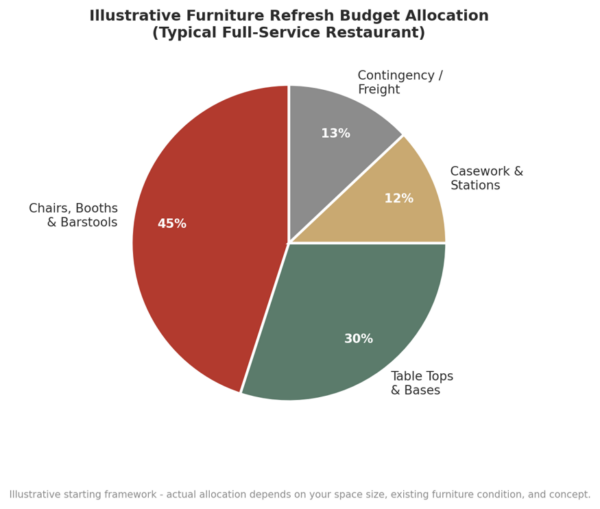
Budgeting by percentage rather than fixed dollars makes the plan portable across concepts of different sizes. As a starting framework, most full-service refreshes land somewhere close to: seating (chairs, booths, stools) as the largest share, table tops and bases as the second largest, and casework/accessories as the smallest.
How to Sequence Without Closing
- Work section by section during regular off-hours (early morning, between lunch and dinner) rather than shutting down entirely
- Order replacement pieces before removing old ones — stage new furniture off-site or in a back room so swap-out happens in hours, not days
- Time booth or table top swaps for your slowest week of the month, not a random Tuesday
- If you must close a section, rope it off and keep the rest of the room fully operational rather than closing the whole dining room
Financing the refresh. Most dealers offer net payment terms, and many operators fold furniture refreshes into broader remodel financing or equipment loans rather than paying cash up front. Whatever the funding source, get firm lead times in writing before you finalize your phase schedule — a furniture delay mid-renovation is one of the most common reasons phased projects run over.
The operators who do this well treat furniture refresh like a rolling maintenance program, not a once-a-decade event — a standing annual budget for the highest-wear 10-15% of the room keeps the whole space looking current without ever requiring a disruptive, all-at-once overhaul.
Use the table capacity calculator and weight + pallet calculator to plan quantities and shipping costs before you finalize a phase budget, or request a quote for a phased order.