

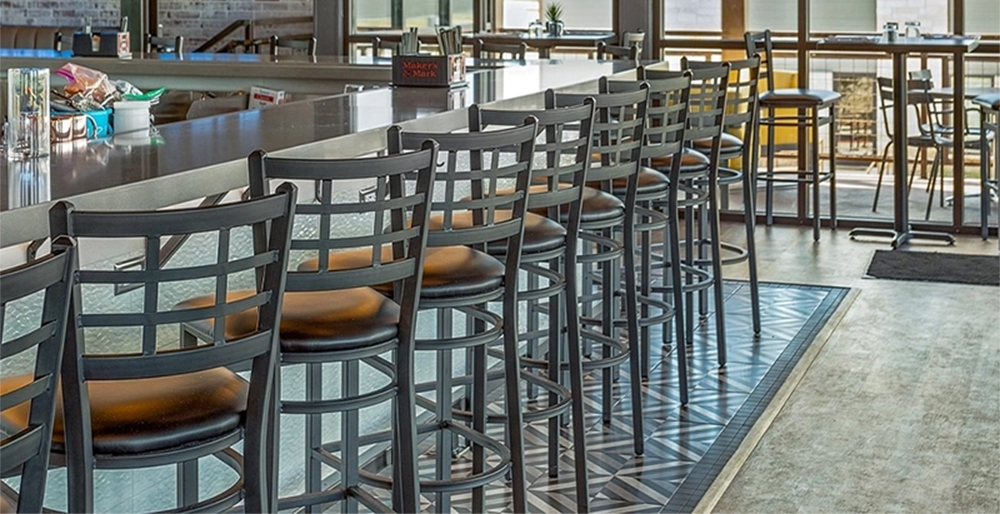
Bar and lounge areas carry outsized weight in a restaurant’s overall performance — they’re where guests wait, where they pre-game before a meal, and increasingly where they spend an entire evening without ever sitting down at a table. Furniture in this zone works harder than almost anywhere else in the building, and the trends shaping 2026 lounge design are less about looking trendy and more about supporting exactly that behavior.
Comfort and “linger-worthy” design are replacing novelty. After a few years of statement, Instagram-driven furniture choices, bar and lounge design is shifting back toward genuine comfort — curved-back stools, plush low-profile lounge chairs, and layered textures that invite guests to settle in rather than perch. The strategic logic is straightforward: a lounge guest who’s comfortable orders another round; one who isn’t leaves for the next bar on the block.
Material mixing is replacing monochrome minimalism. The stark white/gray/black palettes that dominated bar design for the past decade are giving way to natural wood tones, warm metals like brushed brass or black steel, and richer colors — caramel, clay, antique cream. For furniture buying, this means pairing hardwood or wood-look tops with metal accents and upholstered cushions rather than committing to a single material and finish throughout.
Modular and reconfigurable seating is a real operational advantage, not just a design trend. Movable lounge seating and modular booth sections that can flex between a 2-top and a 6-person social configuration let a bar area adapt from a slow Tuesday to a packed Friday without wasted floor space either way. This matters more in bar/lounge zones than almost anywhere else in a restaurant, because group size is far less predictable than it is in the main dining room.
Charging access has moved from perk to expectation. Guests treat a lounge or bar as a place to work, wait, and socialize, often for extended periods — a table or bar top with no visible way to charge a phone increasingly reads as an oversight rather than neutral. Bases with built-in outlet punch-outs, concealed wiring, or add-on wireless charging pads are becoming a standard spec request rather than a premium upgrade.
Durability engineering is catching up to design demands. Bar and lounge furniture takes more abuse per guest than dining room furniture — drinks spill, stools get kicked, cushions see constant turnover. Chip-resistant powder coats, e-coated steel frames, and component-based seating (replaceable seat pads and backs rather than full-chair replacement when upholstery wears) let operators keep the high-comfort look without a punishing replacement cycle.
One trend worth watching skeptically: ultra-low lounge seating that looks striking in a photo but creates real friction for guests getting in and out repeatedly over a long visit, and can complicate ADA seating height requirements if it’s not paired with standard-height alternatives nearby.
Explore swivel and stationary barstools, or check outlet/USB charging port options for your next bar or lounge furniture order.